
What I've Learned About Strategy from Permaculture

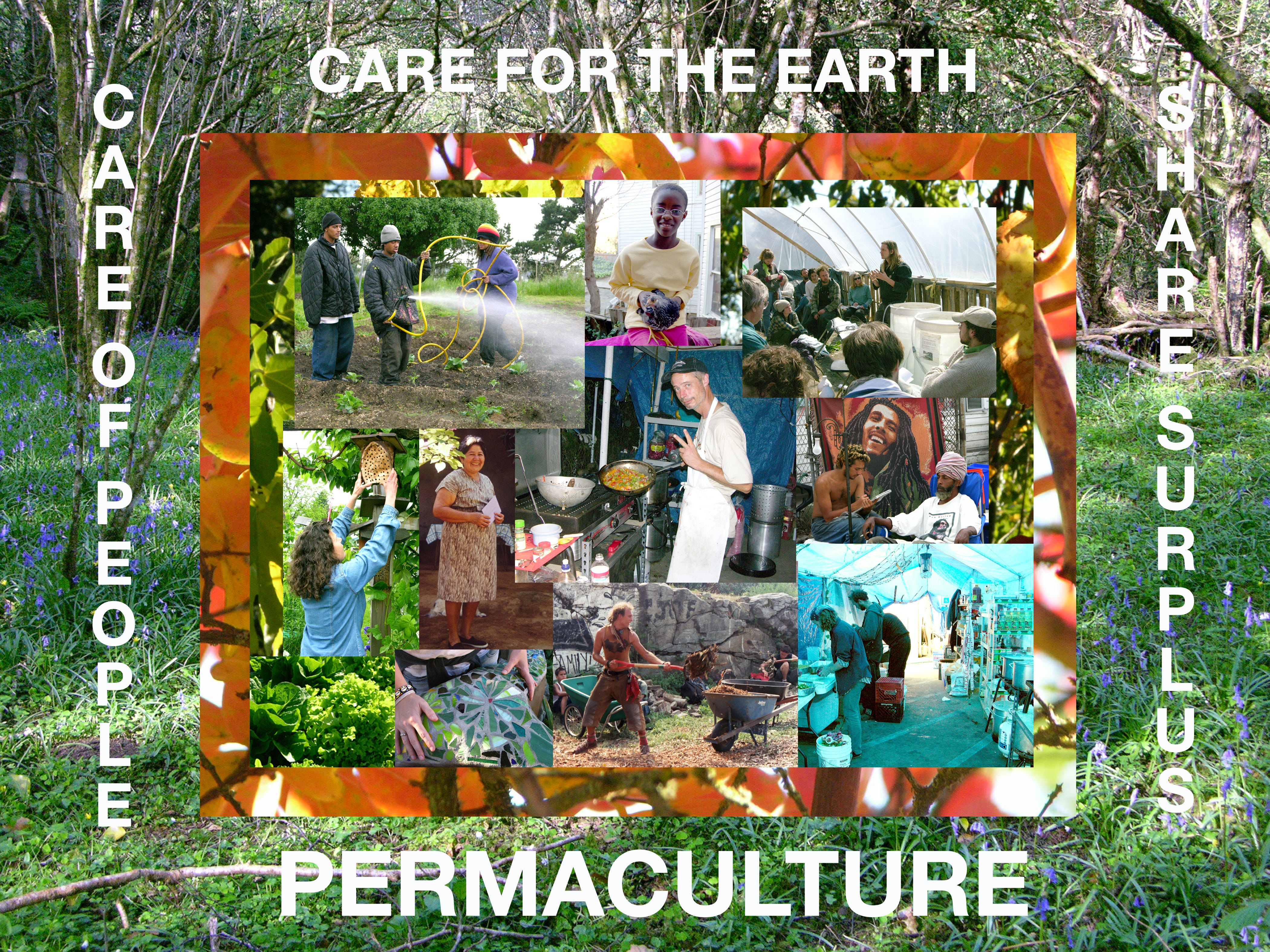
I’m up on an island in British Columbia teaching permaculture in a beautiful ecovillage called O.U.R. Ecovillage: One United Resource. A permaculture course, as I teach it, is pretty full-on, three sessions a day, morning, noon and night, with lots of hands-on projects, which will explain why I haven’t been writing a lot at the moment.
But today I have some time to catch up. Awhile back, I put out a podcast about what I learned about strategy from permaculture, and now that I’m immersed in teaching it, it’s on my mind again. So let me begin with my personal definition of permaculture: a system of ecological design that takes nature as our model to meet human needs while regenerating the environment around us.
Permaculture draws from many different sources: indigenous practices, traditional farming methods, biological and ecological science and systems theory. While it began focused on food growing and land management, it’s grown to incorporate built environments, economics and social permaculture, and become a global movement.
Permaculture informs strategy because, in essence, strategy is design, that is, a vision of what we want and a plan for how to get there. In permaculture, our designs are constrained by three core ethics: care for the earth, care for the people, and care for the future. Or sometimes “earth care, people care and fair share.” Future care implies taking you’re your fair share, limiting consumption and returning surpluses back into the system rather than extracting them.
These three ethics could serve as a foundation for a just and sane society. We cannot survive if we don’t care for the earth or the life support systems that sustain us. To do that, we also need to care for other people, to understand that we are all interconnected and in relationship, and that it’s our responsibility to provide a viable future for those who come after us.
By following these ethics and learning from nature, we can create abundance. Permaculture doesn’t preach scarcity, nor condemn us to a grim life of food lines and scratchy gray wool garments, but rather envisions lives in which we enjoy healthy and delicious food, time to share with friends, family and neighbors, leisure to enjoy the beauty of nature, lives in which we work hard at satisfying tasks that provide for real needs, and also have energy left to create celebrations, art, beauty and pleasures of many kinds. We do this not by endlessly consuming more and more resources, but by using what we have around us more intelligently, efficiently, and sensitively to close loops and create regenerative systems.
What are the lessons for political strategy? First of all, when we understand strategy as design, we start with a goal in mind. We must know what we want, not just what we don’t want. We need to hold a clear vision of what our longed-for world looks like and feels like. I’ve learned the same lessons from creating ritual and casting spells: having a clear vision of what you want is what directs the energy in needed to get it.
Secondly, in permaculture we do a site analysis. We look at the terrain and ask “What are the forces impacting us? What are the limiting factors? Resources? Opportunities? Dangers?” On a piece of land, we might be looking at sun, wind, soil, from which direction a flood might come or a wildfire burn more most fiercely. In political activism, we might ask what resources we have of time, energy, personnel, or money, who our potential allies might be. What groups are already working on this issue how could we support their efforts rather than reproducing them? What groups might be aligned with us that we could build coalitions with? What are our limiting factors and constraints? They might be ethical constraints: for example, we will not spread false information or carry weapons to a protest. They might be limits of money, energy, media access or something else. Once we know what the limitations are, we can embrace them if they are actually helpful, like ethical constraints, or look for workarounds if they are limits on resources.
Where are the opportunities presented to us right now? Are there particular issues that can galvanize support? Potent anniversaries? We can’t always anticipate what event will capture public attention, but we can be prepared when something does to organize and mobilize quickly.
What are the dangers? Are there potential mistakes we could make that would be devastating to our cause, and how can we avoid them? Are there tactics that will increase our physical or legal danger, or potentially anger or endanger those who might otherwise support us? Are the potential benefits of those tactics worth the risk? I’ve seen us argue a lot, in the movement, about whether certain tactics are violent or nonviolent—breaking windows, for example. Rarely have I seen us stop and ask, what would breaking windows accomplish? What message would it send? What additional danger might it create? Are there goals it would achieve that make the increased risk worthwhile? What potential allies might it attract? Repel? How does it fit into our overall goals?
Sometimes there are there dangers we must accept, if we want to take action at all. At this political moment, it can be very hard to predict what the consequences might be for resistance. Can we provide support to mitigate the risks? For example, if we plan a strategy that includes civil disobedience, we must also organize for jail support, legal support and collective solidarity.
Once we’ve done our analysis and formed our plan, we might think about strategy somewhat like creating a garden. First, we must prepare the ground. In the garden, that might mean composting and amending the soil, or planting a cover crop. In organizing, what education and outreach can we do to prepare people for the actions we might ask them to take, or to build solidarity for actions we intend to engage in. In Miami, in 2004 when we organized a mobilization against the Free Trade Area of the Americas summit, we literally planted a garden together with local residents in public housing as we were preparing for the mobilization. A local permaculturalist had brought 100 ground cherry plants that we carried through the mostly Black neighborhoods and gave away before the days of action. On the day of the big march, when the police attacked and chased marchers into the neighborhoods, people took protestors in and hid them. Months after the action was over, some protestors remained in the area and continued to help cultivate the garden.
We need to cultivate relationships even more than vegetables, the relationships that can provide support and solidarity in the long run, because the moment of crisis is too late to begin building the support when we need most need it.
When we’ve prepared the ground, we can plant seed. We might plan a series of actions that build on each other over time, perhaps starting with very safe tactics and building up to more confrontational actions. The No Kings marches are an example: starting with small, local actions they built a coalition that organized multiple major marches in a year, culminating in possibly the larger political protest ever in March of 2026. Some activists criticized the marches, saying that peaceful protest is not enough, that we need a general some more militant form of action, perhaps a general strike. But a general strike does not arise out of nowhere. The marches, the letter writing, the trainings, the affinity groups that have formed can all be seen as seeds that can sprout into longer term and committed actions. The No Kings organizers themselves escalated to a Mayday action of No Work, No School and No Shopping, with hopes to build toward a general strike sometime in the future.
When we do take action or plan a campaign, we need to also consider how to build in resilience. In the movement, we talk a lot about resistance, the ability to stand up against oppression. But we also need resilience: the ability to bounce back after a disturbance, to return after an attack, to stand up after you’ve been knocked down. That resilience comes from many sources: from diversity of people, of perspectives, of groups and organizations that make up our movement, from having multiple sources of leadership and vision, but most of all, from the relationships we build along the way of trust and solidarity.
And finally, we must have a plan for the harvest. What are we going to do if we win? A campaign, an issue, an election? What does victory look like, and how do we build on it for the next campaign and the ongoing struggle?
Mamdani won the race to be Mayor of New York, against the odds, with some specific ideas about how he would govern. And as soon as he was sworn in, he began to implement them, starting with free child care. The more specific we are about how to realize our ideals and how we would use power when we have it, the more we can achieve, and the more trust and support we can build.
So even when you feel like you’re losing, begin the planning for when you win. Envision a world of liberty and justice for all, and plan the steps and the policies that could make it real.
· I keep my posts free for all to enjoy. If you subscribe, you’ll get them in your inbox, along with my podcast, The Movement We Need. I know money is tight these days, but if you can afford a paid subscription, for the cost of about a latte a month, you can support my writing, podcasting, teaching and activism. And you’ll get access to some special perks, like a live Community Conversation once a month—the next one is Sunday, August 2 from 10-11 AM Pacific TIme!
If you like this post but have too many monthly subscriptions already, here’s where you can make a one-time gift!
I’m so grateful for your support—it makes it possible for me to keep writing!
You cannot build that in the moment of crisis. The soil has to already be prepared.
We co-steward 60 acres of permaculture land in Michigan and I have been thinking about this parallel constantly. The diversity that makes an ecosystem resilient is the same diversity that makes a movement resilient. Monocultures fail under pressure whether you are growing food or building power.
The point about knowing what we want and not just what we don’t want is the one most organizing spaces I have been part of struggle with. The vision has to be as specific as the resistance. I thank bell hooks for helping start my values system and people like you to continue its strategy.
a timely piece of thinking for me as I work on further developing (reinventing? updating?) a popular education method known as Naming the Moment. I'm familiar with permaculture from your writings as well as having met others practicing permaculture. And your thinking about strategy connected with one piece of thinking i was doing today in articulating how popular education moves from sharing experience to identifying patterns to analyzing those patterns that we agree are most germane to planning for action. This last piece is where strategy most obviously comes in. But then i realized that strategic thinking requires all the popular education steps that i've been working with, beginning with starting with sharing our experiences which is, when put into practice, usually some kind of storytelling process. Which connects in some ways with the discussion you had on your recent podcast with the CSS folk. Suffice to say that I have lots of thoughts. One that i've been wrestling with this past week is what it looks like to apply Donna Haraway's notion of "staying with the trouble," given that our likely planetary future is one of worsening environmental conditions, some degree of collapse (of various kinds) which are punctuated this week by news of a "super el niño," the increasingly likely collapse (in the next few decades) of AMOC (the Atlantic Meridional Overturning Current), and the heat waves that are hitting multiple continents as we speak. One thing that Donna Haraway does is to use art (sculpture, paintings, science-fiction stories) to "think with." Which reminded me of your Fifth Sacred Thing (which you mentioned on your podcast) and which has been, for me, a powerful story with which i have "thought with" for the past 30 years. I think now that it is a good example of what Haraway means by "staying with the trouble." Just as your work in permaculture, not surprisingly, also relates. Finally, another notion i am working with for which your work also strikes me as an example, is what Haraway's colleague, the anthropologist Anna Tsing, describes as "telling terrible stories beautifully." Something that Tsing advocates that we need to get better at... and quickly. I hadn't connected your work with this thinking until this weekend (at least consciously) and it is exciting to see these pieces of thinking connecting. As i've mentioned in other comments, your work, Starhawk, has been a significant influence on me since I read Dreaming the Dark and was in a workshop you lead at Pigeon Hill Centre in Quebec. And, finally finally, i just realized that the visual model i've created for my new iteration of Naming the Moment is a spiral and that makes me wanna look at your first book again - DOH!!! More connections staring me in the face. Ain't life grand! Enjoy BC. You're not far from where my niece has as farm.