

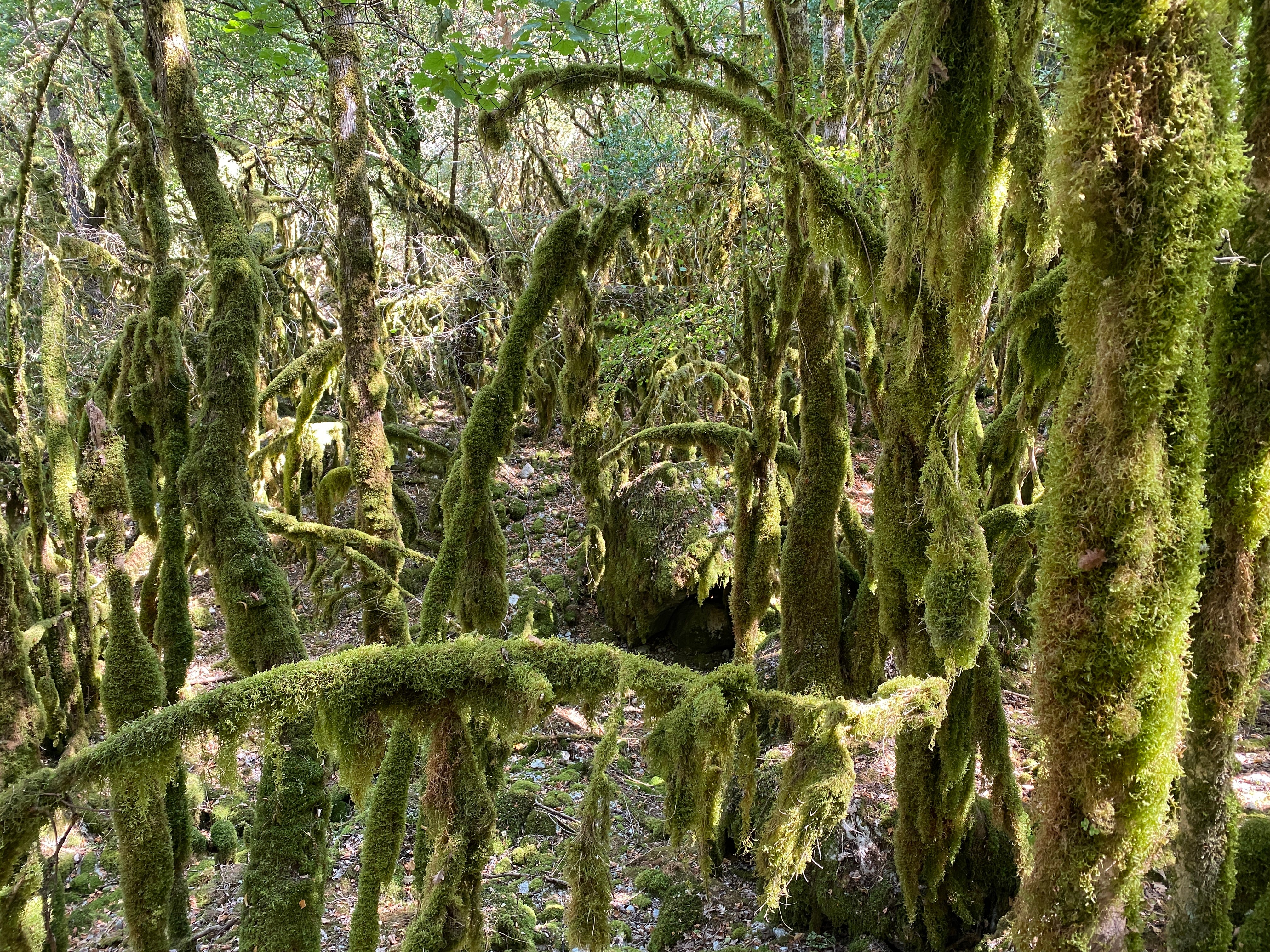
Yesterday, I went on a hike, the first challenging hike since my knee surgeries earlier this year, through primeval forest in the Drôme region of France. The forests are dry and suffering from drought, but still beautiful, the small trees growing down in the ravine draped in moss and lichens, the great beeches higher on the hills spreading their majestic limbs as if to say “This…all of this…just look at how beautiful it is!”
Much as I love trees, and much as the forest is the place where I find emotional peace and spiritual renewal, I can’t fully give myself over to the bliss of nature without a constant refrain playing in the back of my mind. “These trees are already turning brown—if a fire came, they’d blaze up in an instant.” “This duff is tinder dry.” “This section is pure dog hair, thickets of brush and saplings, fuel loads that could burn disastrously.”
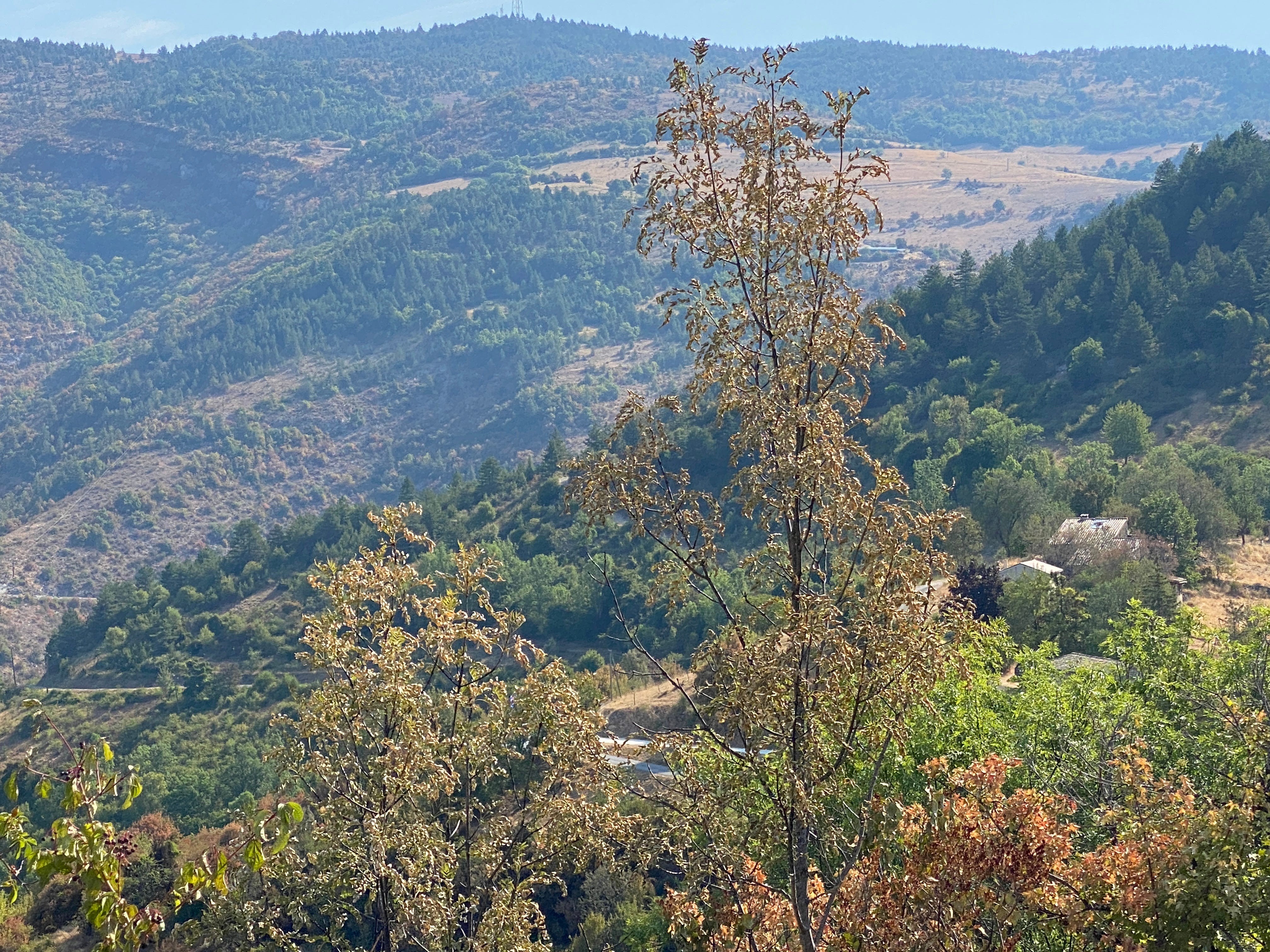
I live in the forests of northern California. Our lands are always at risk for a catastrophic wildfire. Fire is at the heart of our concerns, our fears, and our community. In 1978, a fire burned our area, just a year or two after many of the back-to-the-landers of that era had built their homes. Almost half a century later, we still feel the scars even though it may take a trained eye to see the impact on the land.
I teach about fire and forestry in our permaculture courses, and I’m on the Forestry Committee for the homeowners’ association that manages the roads and common lands for 2500 acres. For an old lady, I’ve spent a lot of time in the woods, doing what I can to thin, limb, clear brush, and assist with pile burns and prescribed burns to create more safety around our homes and evacuation routes. We are blessed with an active community, and for over three years, starting during Covid, volunteers from an informal group called The Local Crew got together every weekend during the winter and spring to work in the woods, safeguarding access routes. Another community organization, our Coast Ridge Forest Council wrote grants to get major work done on a scale volunteers alone can’t reach. We’ve been well-supported by Cal Fire in our area, and our local Cal Fire Chief Marshall Turbeville has been enormously helpful in educating the community and supporting people’s efforts to manage their own land and bring good fire back. It’s an example of how government can and should work to support communities and provide benefits that individuals simply cannot access alone.
I know a bit about what it takes to mitigate the risk of wildfires. As I’ve been traveling this summer, wildfires have raged in places, like here in France, that rarely before worried much about them and don’t have the same infrastructure we have in California. My own land came under an evacuation warning twice from nearby fires—thank Goddess and our firefighters, we were safe. I’m known to be an almost preternaturally calm and grounded person, but if there’s one thing that can make me spit, scream and foam at the mouth, it’s when Trump and his lackies start spewing blame--corrupt, greedy know-nothings who have never picked up a chainsaw or a pole pruners in their lives, never spent a morning hauling brush or scraping a fire line, never packed a go-bag and pondered what to leave behind, never spent anxious days phoning friends to find out if they’re safe, never had to cancel their fire insurance because it was too damn expensive, never driven through a tunnel of fire, never put their lives on the line to protect their neighbors and who have, in fact, cut funding for the necessary preventive work and for the firefighters who do risk it all, and pushed policies that undermine any serious attempt to deal with the climate crisis that fuels these fires. (Hear me rant on my podcast here.)
It’s also especially galling when they blame Canada, as the fires were menacing indigenous communities there who’ve done the least to create the current climate crisis and benefited the least from our economic system which has fueled it. Their wisdom and their knowledge of the land is timeless, but climate change is changing the landscape and the conditions that we all exist in. And meanwhile our own Western lands are ablaze!
What does it really mean to tend a forest? The answer, as is so often in permaculture or any question about living systems, is, “It depends.” It depends on where the forest is, what its condition is, how it was traditionally managed first by indigenous people, later by settlers, colonizers and logging companies, on what resources and options you have and what the land actually needs for healing.
The forests I know best are in the those in the coastal hills of Northern California, a mixture of redwood and Douglas fir on north slopes and near streams, and oak savannah on drier slopes. These forests were managed by indigenous people for tens of thousands of years, mostly with fire, and so they represent a fire ecology. What that means is that the trees, shrubs and bushes are mostly either fire adapted--that is, they can withstand fire and regenerate after a fire, or fire dependent--some actually need fire in order to ripen their seeds and reproduce.
The original peoples of the land burned periodically to keep the forests open, to eliminate diseases and bugs, to be able to easily pass through the woods for hunting and gathering, to produce materials for things like basketry and to reduce the danger of catastrophic wildfires. They elegantly tended the land to produce a mosaic of habitats that created an abundance of wildlife, game, birds, useful plants and biodiversity. Because they burned often, the fires were low, moved relatively quickly and regenerated the landscape instead of destroying it.
When settlers moved in, they too burned, though not as sensitively as the indigenous tribes. But in the early 20th century, we began suppressing fire. As more and more people lived in the woods, the danger of wildfire became greater. Smokey the Bear warned of the dangers of fire—a valid warning because uncontrolled wildfire is something very different from a cultural burn. But without regular burning, the forest grew thicker and thicker, often choked with small saplings and underbrush that create an enormous, flammable, fuel load, filled with ladder fuels that allow a fire to climb up quickly into the canopy where it becomes immensely destructive. And with climate change increasing drought and heat, fire conditions have dramatically increased over the past few years.
So what can we do? There’s a lot that we can do to bring our forests back to health and make them safer, but all of them involve time, labor, expertise and ultimately money and other resources because of the vast scale of the lands involved. Yet doing them benefits everyone, not just those who live in the woods, but those who live in vulnerable suburbs in the wildland-urban interface and those even hundreds of miles away who choke on the smoke.
When our forests are overgrown, we can begin by thinning, pruning and limbing up the trees. It seems counterintuitive to many of us who have been forest defenders to go out into the woods and start chopping down trees, but doing so can actually benefit the health and safety of the woods. Forest ecologists estimate that when indigenous people were managing our Western Sonoma County lands, there were on average 45 trees per acre. Those trees were big, many of them old, with thick trunks and spreading canopies. Now we often have 400 trees per acre, but most of those are thin, overcrowded saplings. Some are dying, others are subject to diseases because of overly dense conditions, and the ancient grandmother trees are often at risk of being shaded out.
So thinning and pruning are called for—thinning to reduce the crowding, pruning and limbing up to create a break between fuels on the ground and the canopy above. We’re trying to turn this:
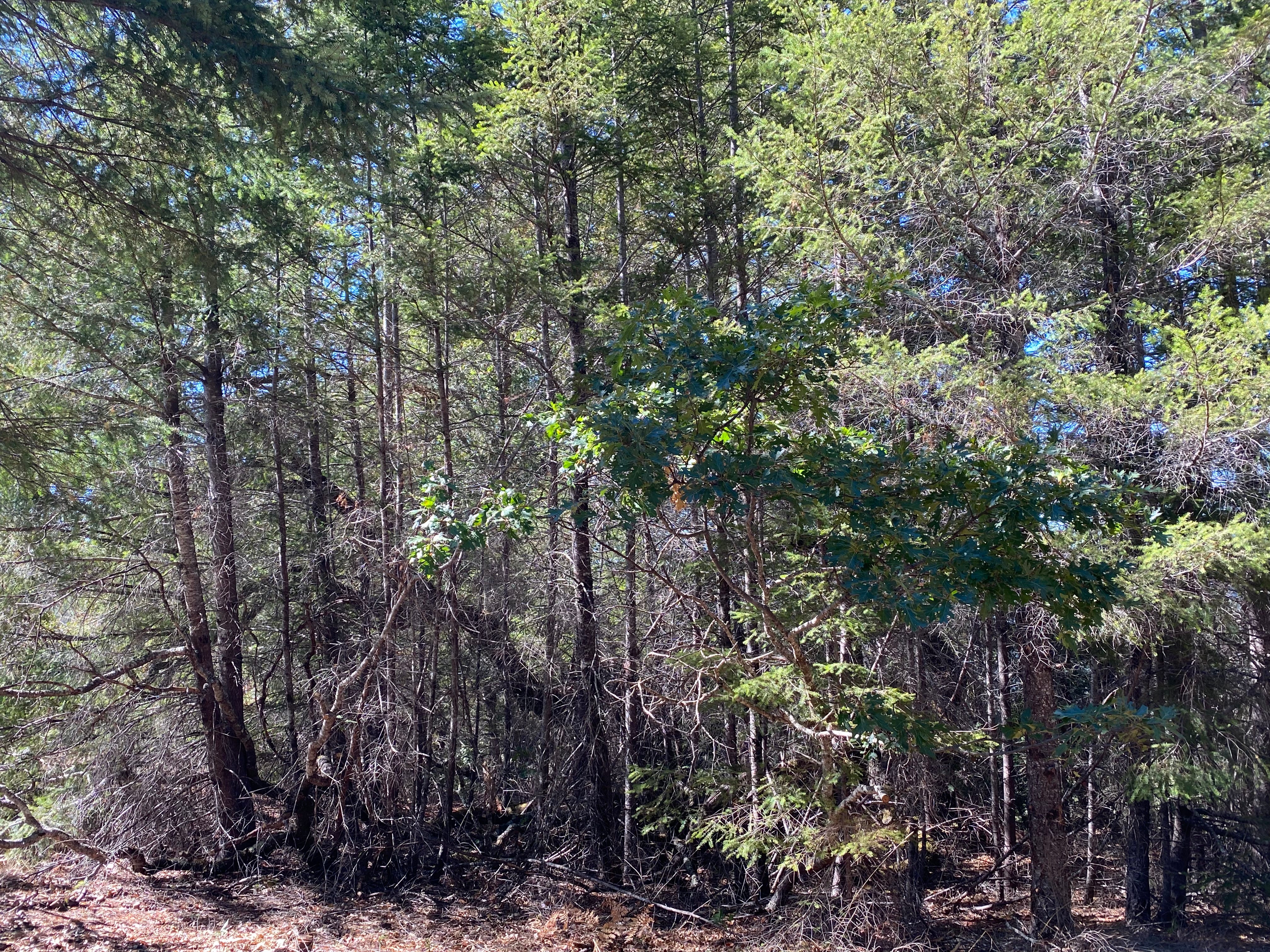
Into this:
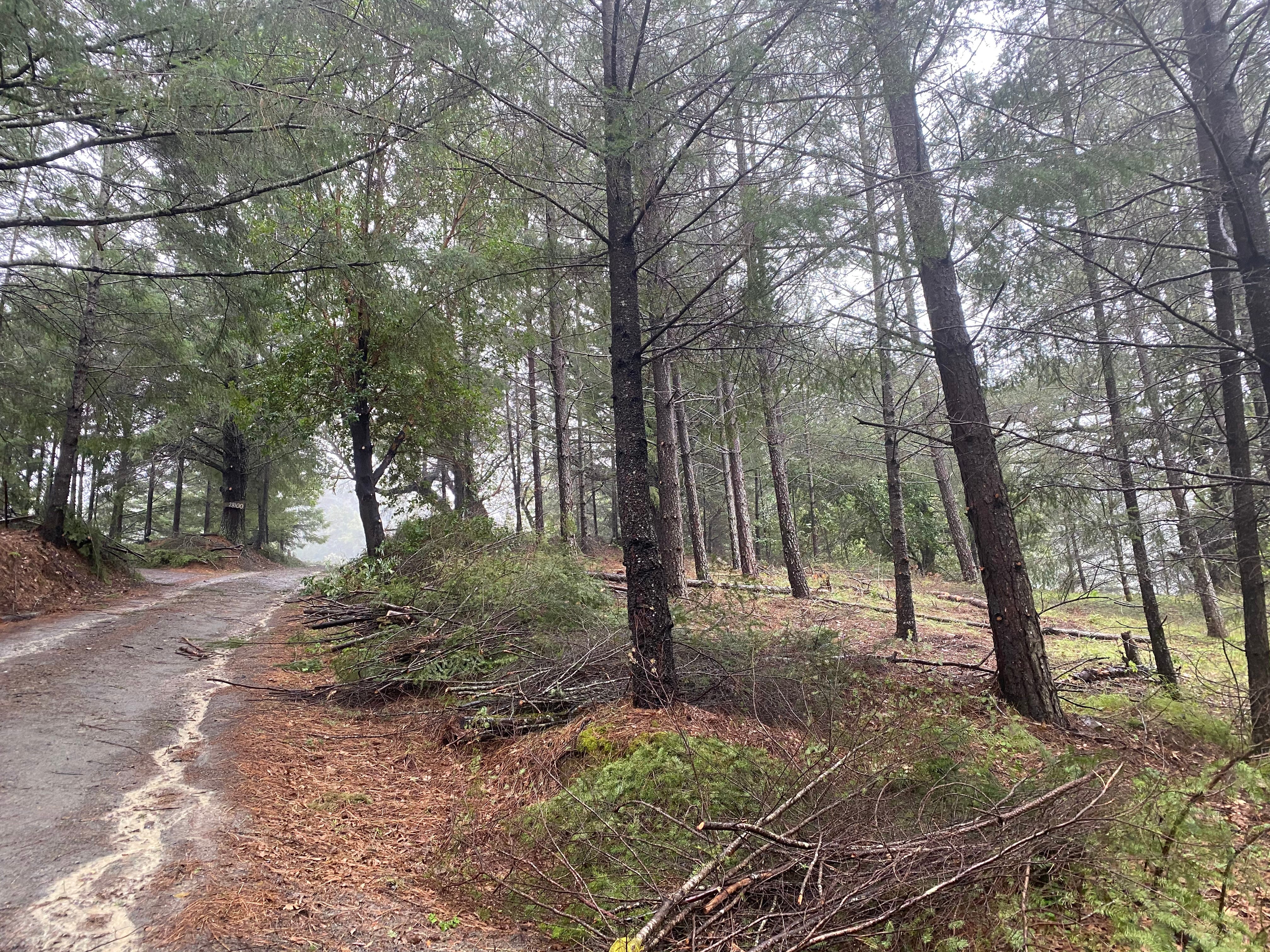
That requires a lot of work. It demands sensitivity to choose which trees should go and which remain, and skill to bring them down safely. Machines can crunch a tree, starting at the top and munching it down to wood chips like some giant tree-eating monster. But that is both expensive, often ecologically damaging, and they can’t get to many of the places that need treatment. So handwork is called for.
And when it’s done, you’re left with enormous amounts of brush, branches and saplings. You could chip them, if you have access to a giant wood chipper, and spread the chips out on the forest floor or use them in compost or in your garden, but chipping is also expensive, not just to buy or rent the chipper but to run it, maintain it and buy the fuel for it.
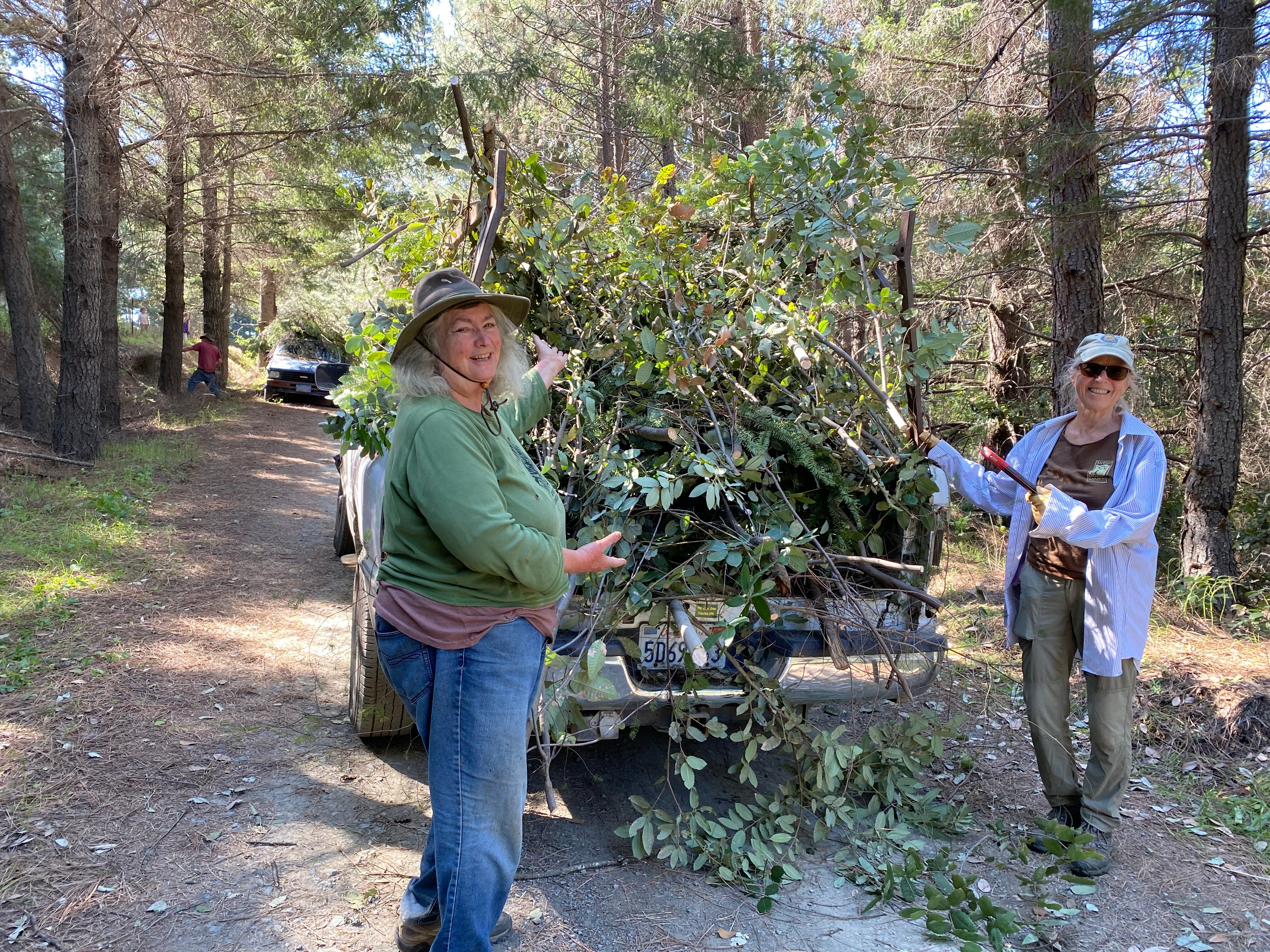
You can use the forest thinnings for what’s called ‘gully stuffing’ or stream restoration to prevent erosion, and this is a beautiful use of the material that also does not put carbon immediately back into the atmosphere, and helps repair the water cycle. But it is additional work, time and ultimately money if you have to pay for the labor.
You could make biochar: charcoal made in a low-oxygen environment that has many uses, from improving the soil and providing a home for beneficial microorganisms, to its use in plaster or even in cement to replace sand and deter mold. But to make biochar at the scale of all of the needed forestry work requires an infrastructure that is only now beginning to be put into place.
So most often we end up burning all the slash. I have to admit, there’s nothing more fun than a giant bonfire, and though this may not be the most ecological way to deal with the material we are preventing a much more catastrophic fire with the thinning and clearing, and the bonfires build community.
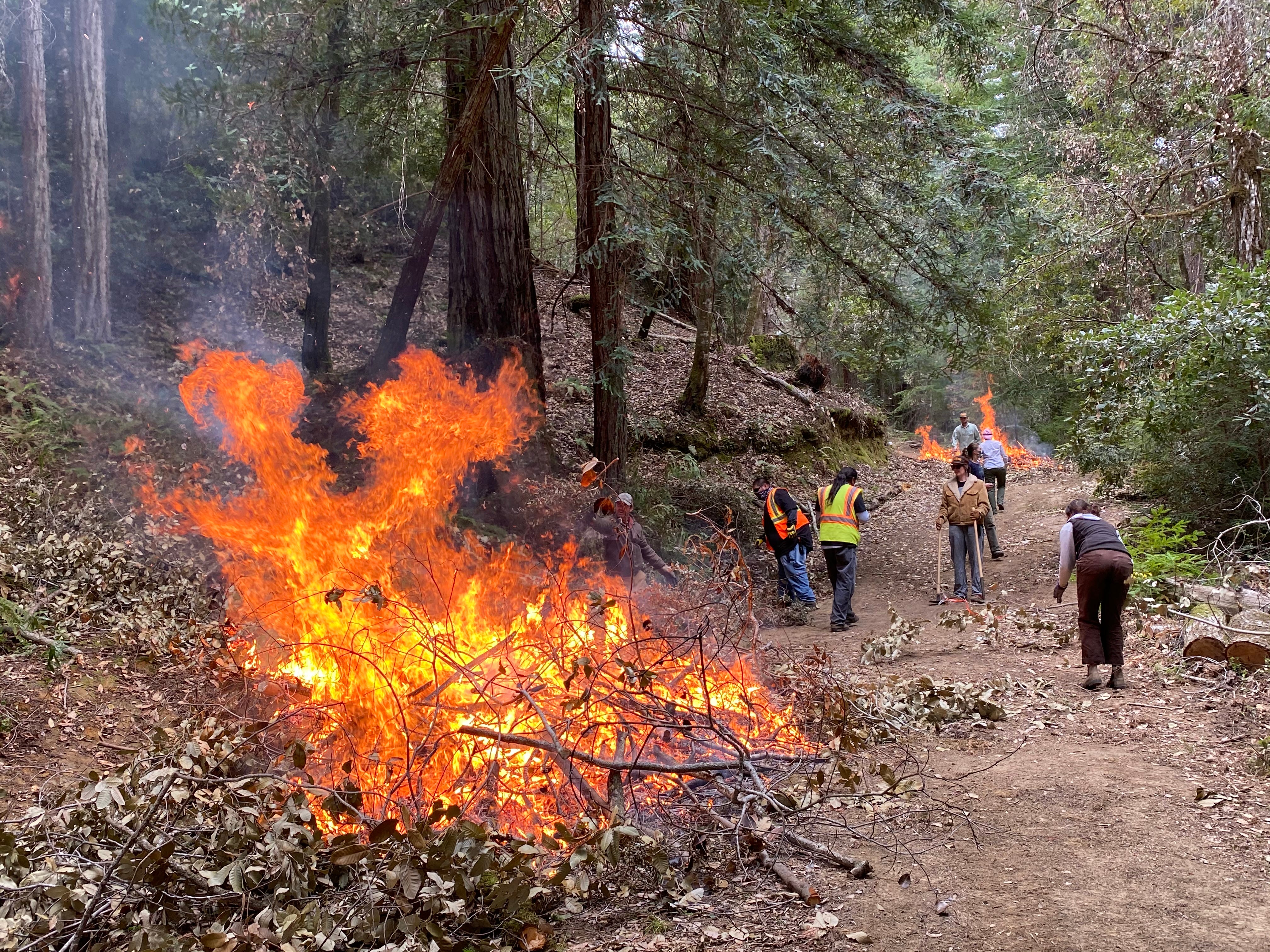
There’s also a great movement here in the West to bring back good fire back to the land. In Humboldt and Mendocino Counties, local tribes work with land managers to burn sensitively and safely. There are many community organizations such as the Good Fire Alliance and Fire Forward that help train people to do prescribed burns, allow opportunities for people to volunteer and help others with burning, and create resources so that people can begin once again to carefully manage our lands with fire.
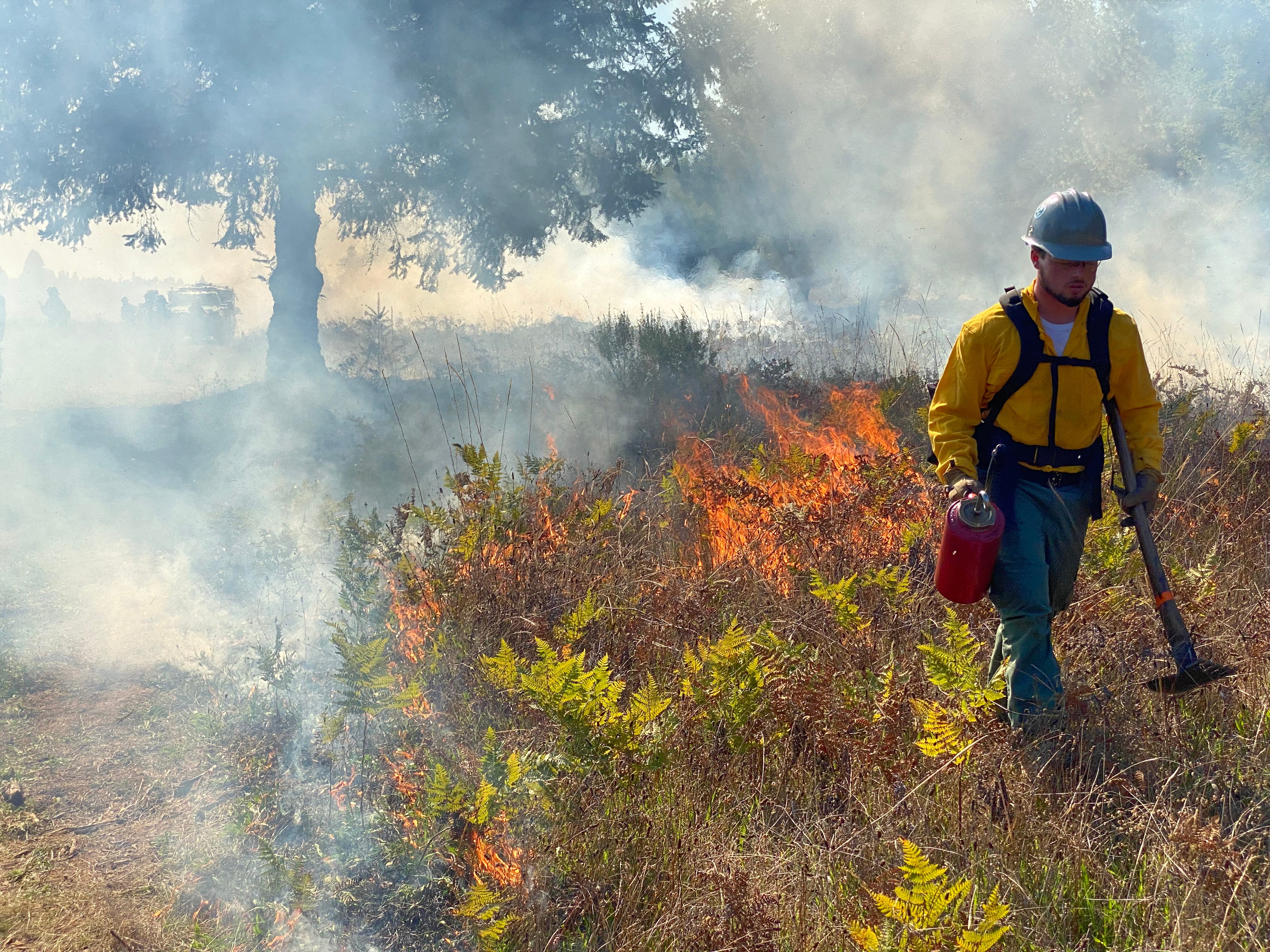
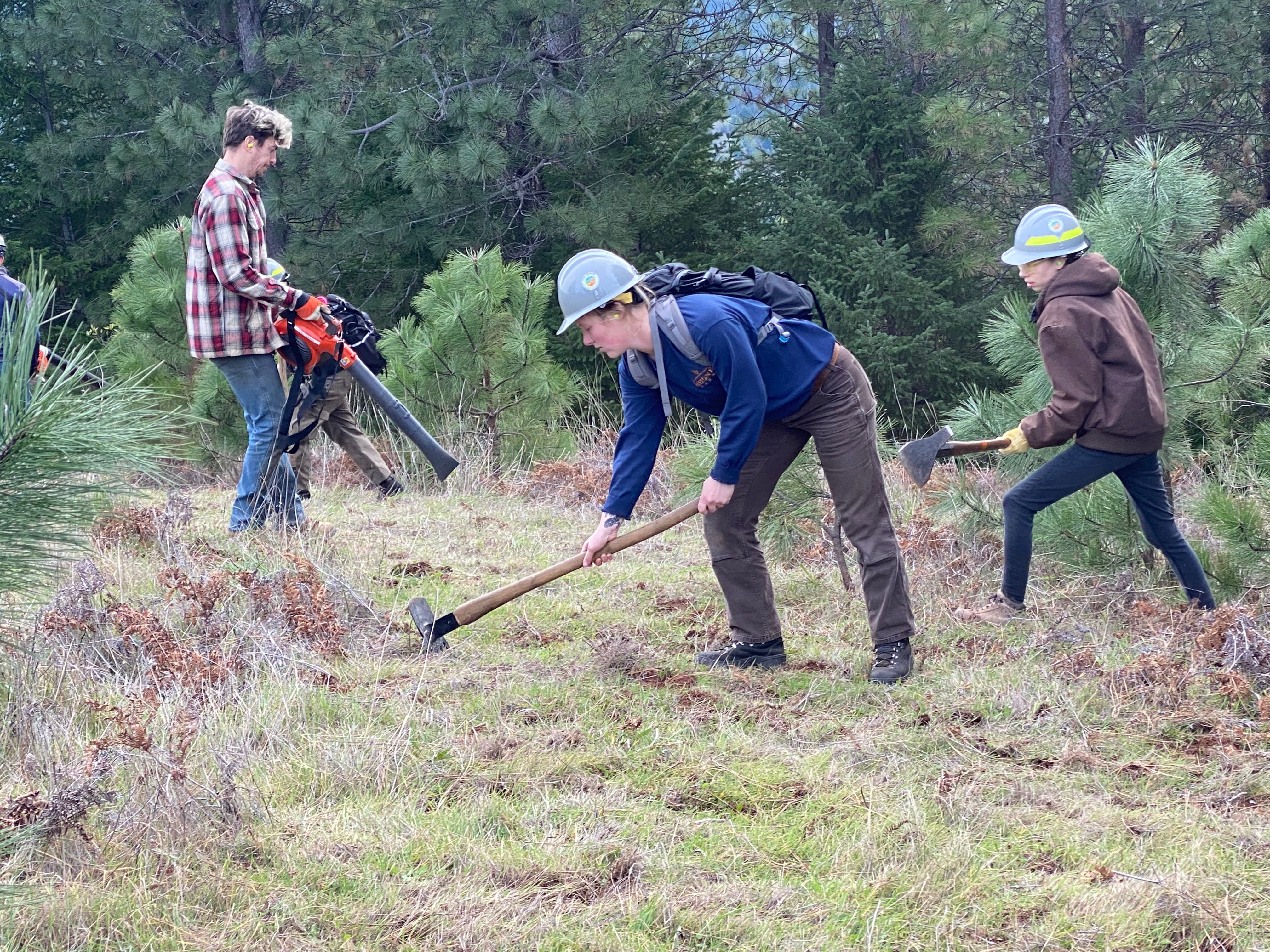
But you can’t just go out and let light a fire in the woods and expected to have a beneficial effect. Very often, before you can burn you must do all of the handwork of thinning and limbing and pruning. You need to scrape a fire line down to bare dirt, and you need plenty of people around to watch the fire and make sure it doesn’t jump the line and get out of control. You need permits and to consider things like insurance and liability. You may even need a fire truck full of water on hand for extra safety.
That said, burning is a powerful way both to create more fire resilience and safety and to regenerate the land and the ecology. We’ve done a number of prescribed burns in our area, and I’m fascinated watching as the fire moves through. Because it burns quickly and relatively coolly, sometimes half a coyote bush will still be green even when the other half is scorched. I’ve seen individual blades of grass still green above the blackened ground. In a very short time, the land comes back. The grasses regenerate, and after a few months you’d never know that the fire had passed through.
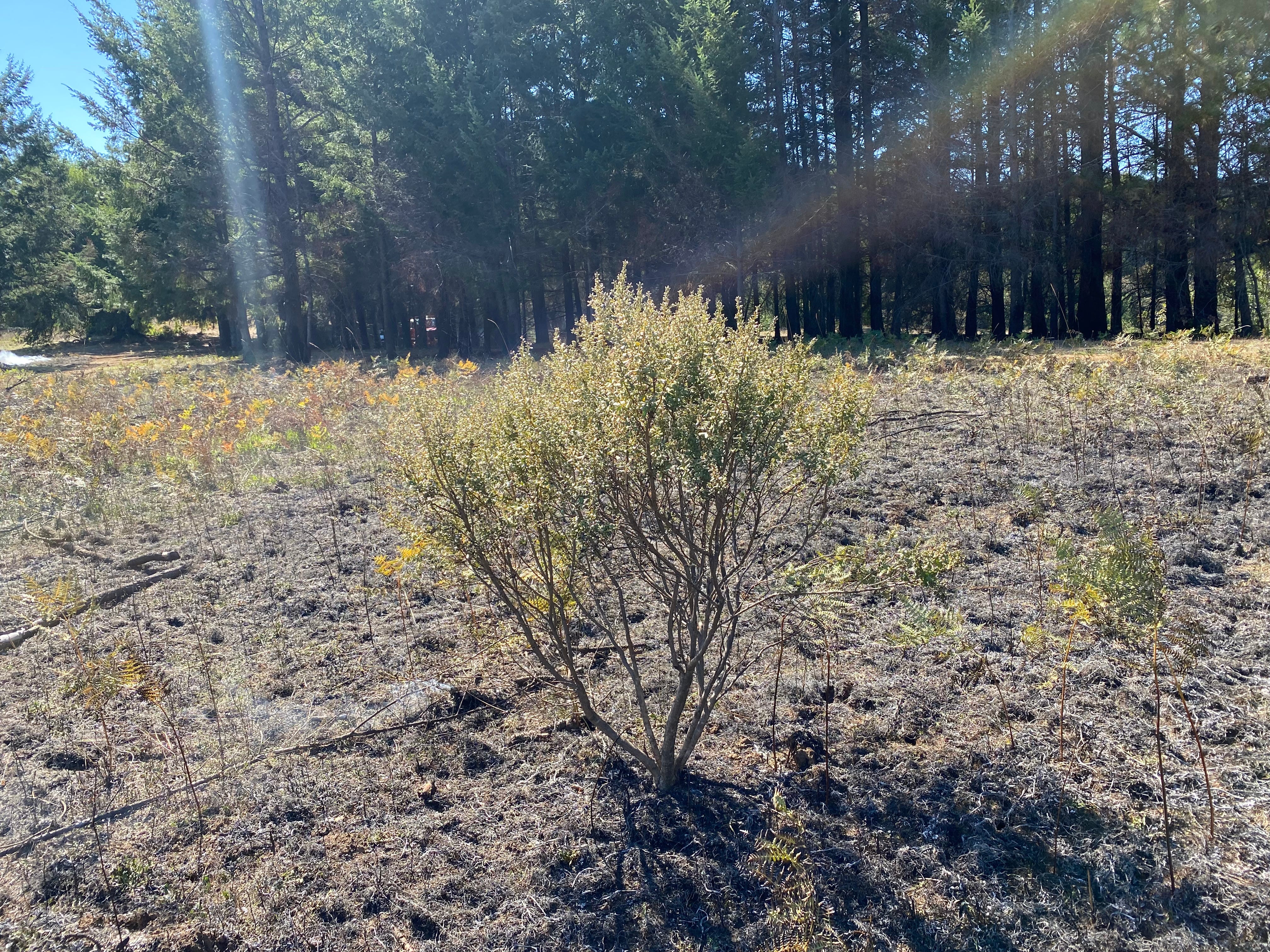
Burning has many benefits, but it does not guarantee fire safety over time. Once an area is burned, it needs to be burned again or managed in some other way. So grazing is another option. We’ve been grazing our cows on land that was burned a couple of years ago, moving them often so that they graze an area down hard and then move on, giving the first area time to recover. This mob grazing protocol was developed by Allan Savory, a land manager originally from Zimbabwe, who realized that grasslands and grazers coevolved and need each other for health and regeneration.
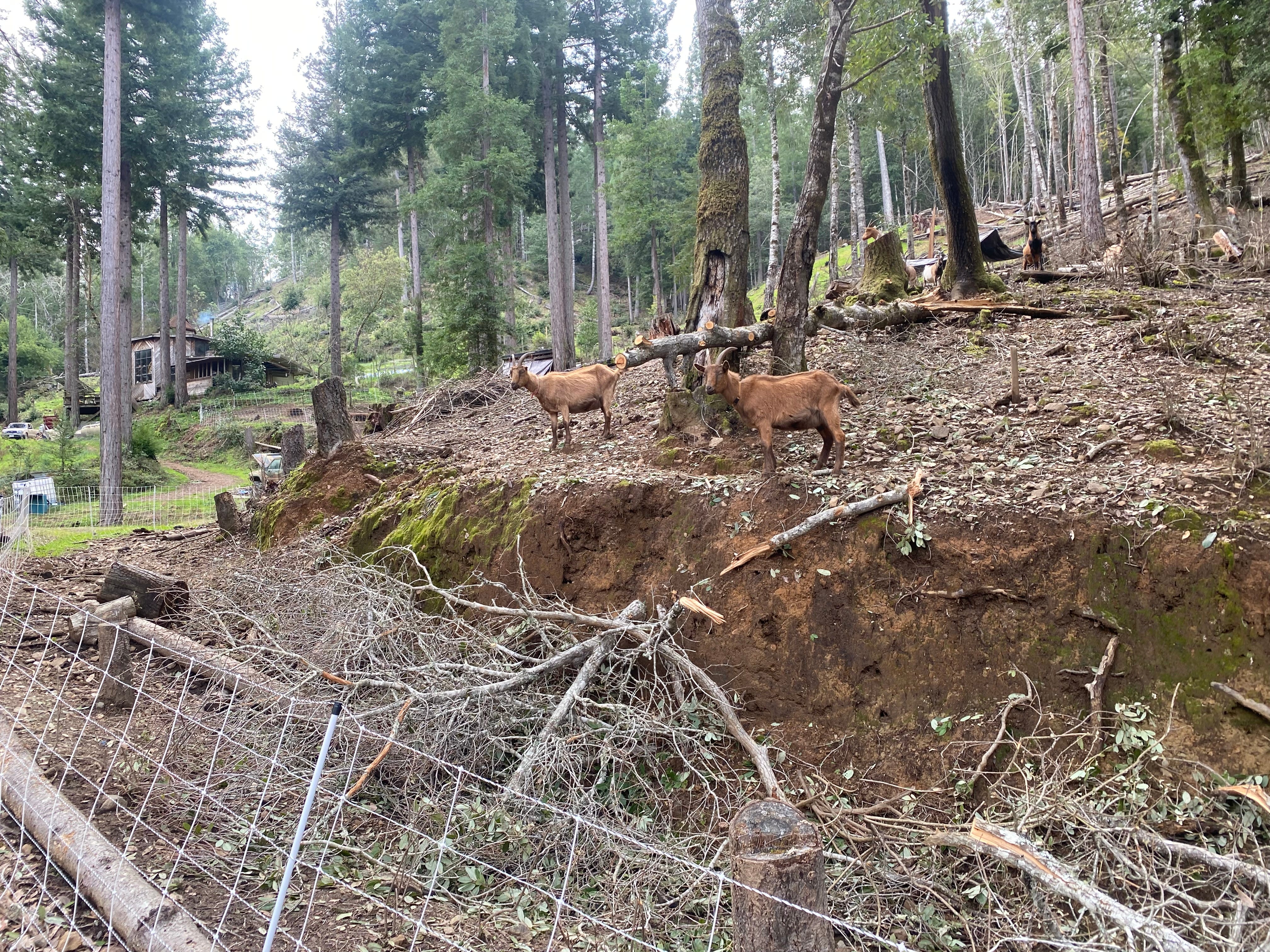
Grazing can also help in the woods. Our neighbor Dave Bushner moves his goats through the woodland where they clear the brush, open up the landscape and reduce the fuel load. But again, all of these management methods require time, hard, physical labor and ultimately money.
When we look at those costs, we realize that there is no way we can manage the entire forest. (Maybe taxing some of those billionaires could help!) So we start with the areas that are of most concern to us humans: our homes and structures, and our roads and access.
There are important ways you can help protect your home from fire: making sure the roof is made of materials that are not flammable or underlaid with a fire-resistant barrier, creating defensible space by clearing an area around your home so the first five feet out from your structure is covered with inflammable material, then for the next 30 feet, vegetation is carefully managed, trees are limbed and sparse. After that, a shaded fuel break for the next hundred feet or so keeps trees limbed up and separated, but the canopy remains to shade and cool the ground. All this work won’t necessarily stop a fire, but it will give the firefighters a chance to protect your home.
If you live in a high fire-danger area, or even a town or neighborhood adjacent to wildlands, make your own evacuation before you need it. Know whether you are equipped to stay and defend your home, and if not, get out early, maybe even before the official order to evacuate. Know where you can go and who you might stay with if you have to leave. If you have a plan, you’ll be far more likely to carry it out safely than if you try to make one at the last minute. Be especially wary on those dry, windy high risk days! And remember that in some of the worst fires, the authorities don’t always have the capacity to notify everyone when evacuation is needed. If you leave early, you’ll be less likely to be caught in jammed up traffic, and you’ll be one less person potentially in need of rescue.
Many of the deaths that occur during wildfires take place while people are trying to evacuate. Imagine driving down the road while a wall of fire rises up on either side of you! What happens if your car stalls, or if the traffic it’s so thick that you can’t get through? That happened in the Camp Fire of 2018 that burned the town of Paradise, when the fire moved so quickly that all First Responders could do was try to get people out of its path through massive traffic jams. Here’s a clip.
Managing the woods is possible and desirable, to reduce the danger of catastrophic wildfires, to make our homes safer, to keep our air cleaner, to reduce the amount of carbon going back into the atmosphere from fires. But none of this work can be done by blowhards pontificating from their social media platforms or their offices in Washington, when they are completely unwilling to provide the time, the money, the labor, or the resources that are needed to do the work. And ultimately, unless we stop burning the fossil fuels that are stoking global warming and make the transition to renewable forms of energy, we’ll continue to make the world hotter, drier, more flammable and less safe.
We can each manage our own land, but we cannot manage the forests unless we work together and receive the help and the resources we need on the scale of what is required.
How can we possibly afford it? That billion dollars a day we’re spending on a war nobody wants could be a start. How about that ballroom billion or so, those billions and now a trillion siphoned off into the pockets of the greedy and selfish? There’s no lack of money out there, and there are plenty of strong, young people who like to be out in nature, are not afraid of a bit of risk, and need meaningful work, work that no AI bot can possibly do.
Imagine if we put our resources toward training workers to help manage and regenerate our forests, to mitigate the impact of climate change, to prevent catastrophic forest fires and bring back prescribed burns and cultural burns to safeguard our communities. You may not be able to wield a chainsaw—even a small, ladylike electric one like mine!—but you can educate yourselves, advocate for these policies, vote for candidates who support them and support the efforts in your own communities to bring our forests and our climate back into balance. Nature is resilient, and when we respect her and work with her, we can once again have forests that are beautiful, safe and thriving.
Some Resources:
Tami Hazel Vaarde. Social Forestry: Tending the Land as People of Place.
I keep my posts free for all to enjoy. If you subscribe, you’ll get them in your inbox, along with my podcast, The Movement We Need. I know money is tight these days, but if you can afford a paid subscription, for the cost of about a latte a month, you can support my writing, podcasting, teaching and activism. And you’ll get access to some special perks, like a live Community Conversation once a month—the next one is Sunday, September 13 from 10-11 AM Pacific TIme!
If you like this post but have too many monthly subscriptions already, here’s where you can make a one-time gift:
I’m so grateful for your support—it makes it possible for me to keep writing!
Thank you Starhawk- this is the best description of the complexities involved in this current moment and the need for us to be willing to learn, adapt and work together! Thanks for shining a light on Marshall Tuberville, Fire Forward, Good Fire Alliance and the generous teachings from many tribes to help skill us up. Even though we are in a shitstorm of gigantic proportions- I am inspired by all the ways we are showing up with each other- local govt, non- profits, colleges etc. Sonoma County has learned so much since 2017! Thanks again for describing the big picture succinctly and adding many pragmatic details. With gratitude - Penny
There is a kind of sheep, that can be mistaken for a goat from its looks alone, that comes from the Western isles in Scotland, called Soay sheep. They are used to eat the gnarly, prickly brush on the Scottish coast, which in turn helps in fire prevention. I love these sheep and i am sure they would help lots in many forest situations.